




Choosing a sleeping mat
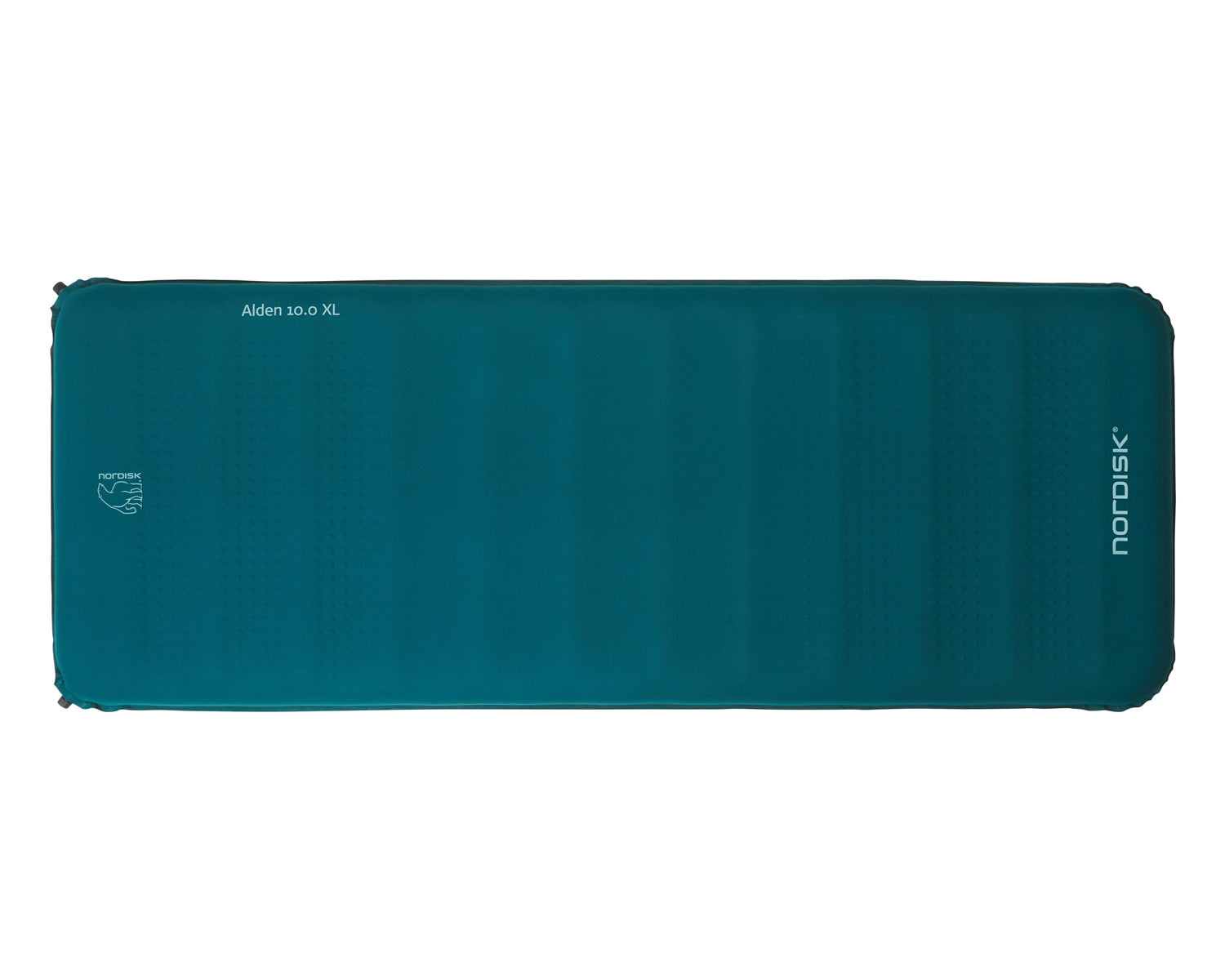
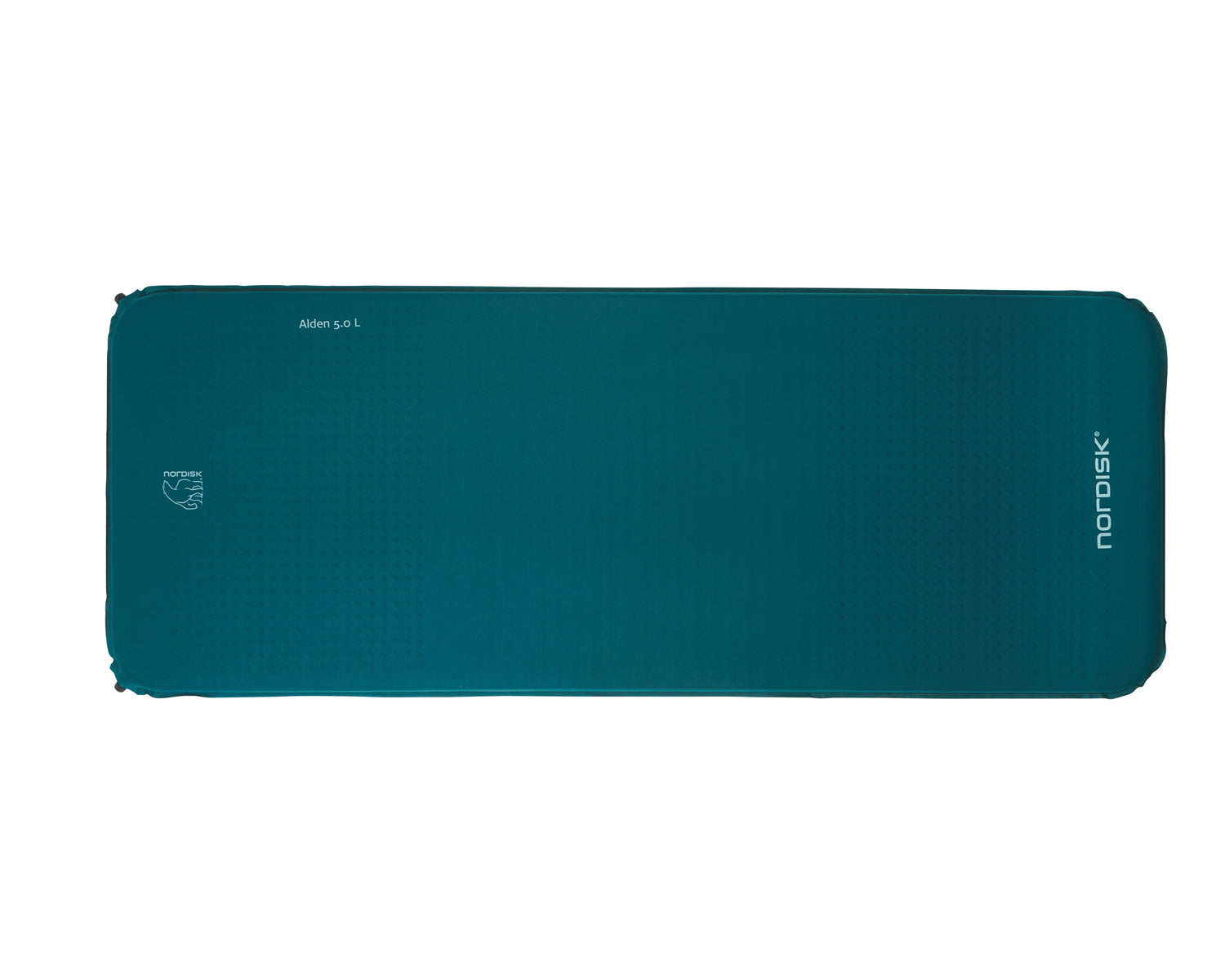
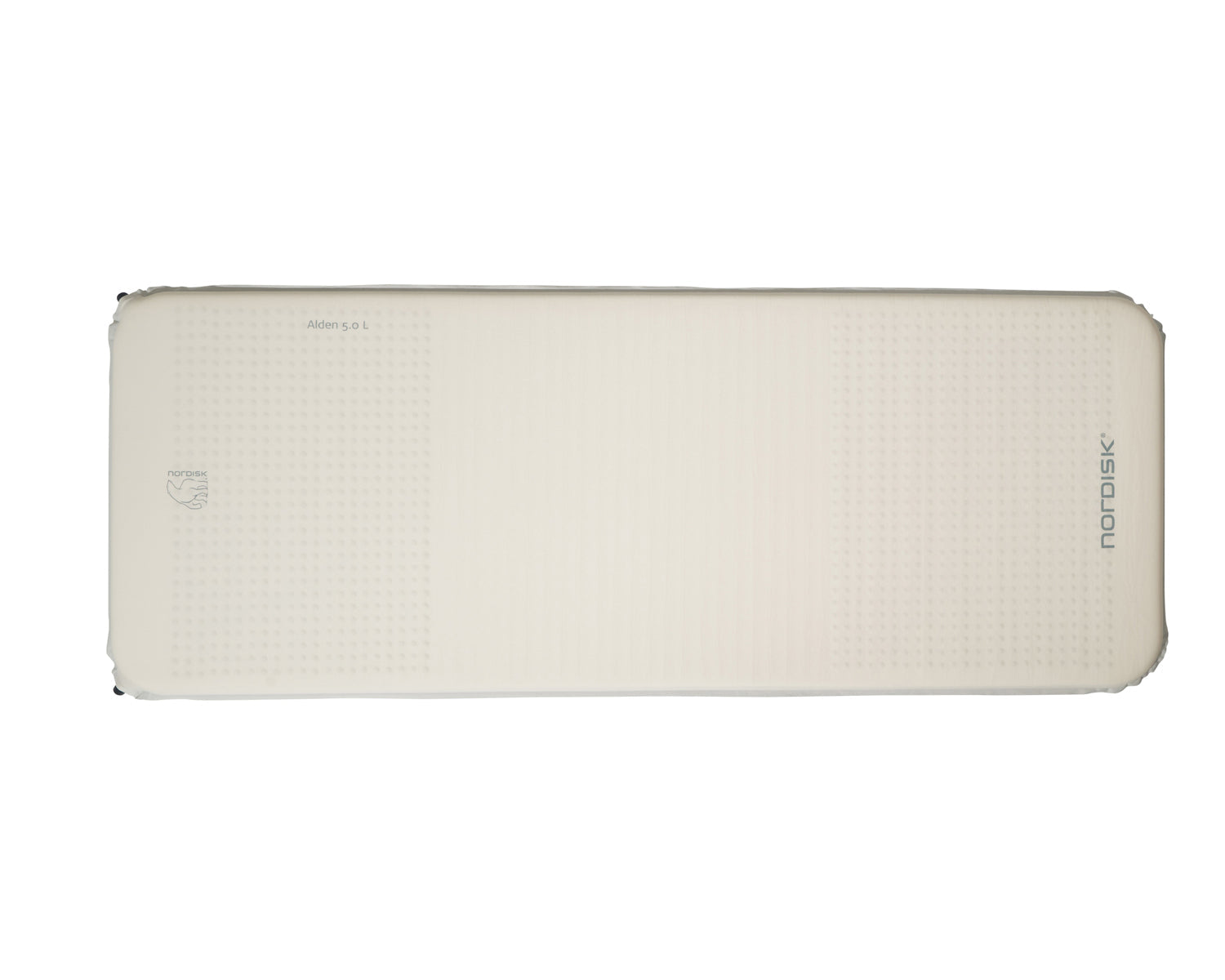
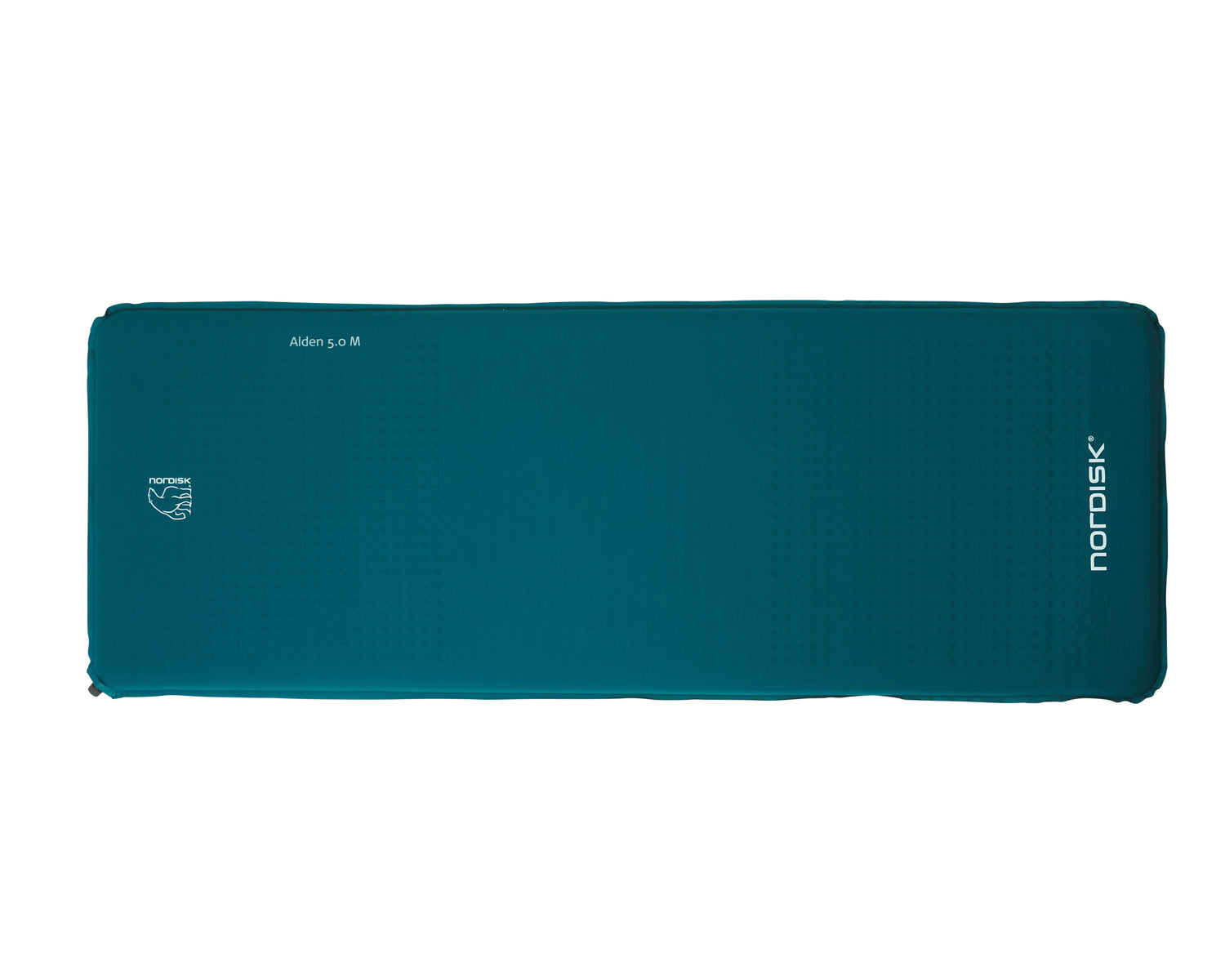
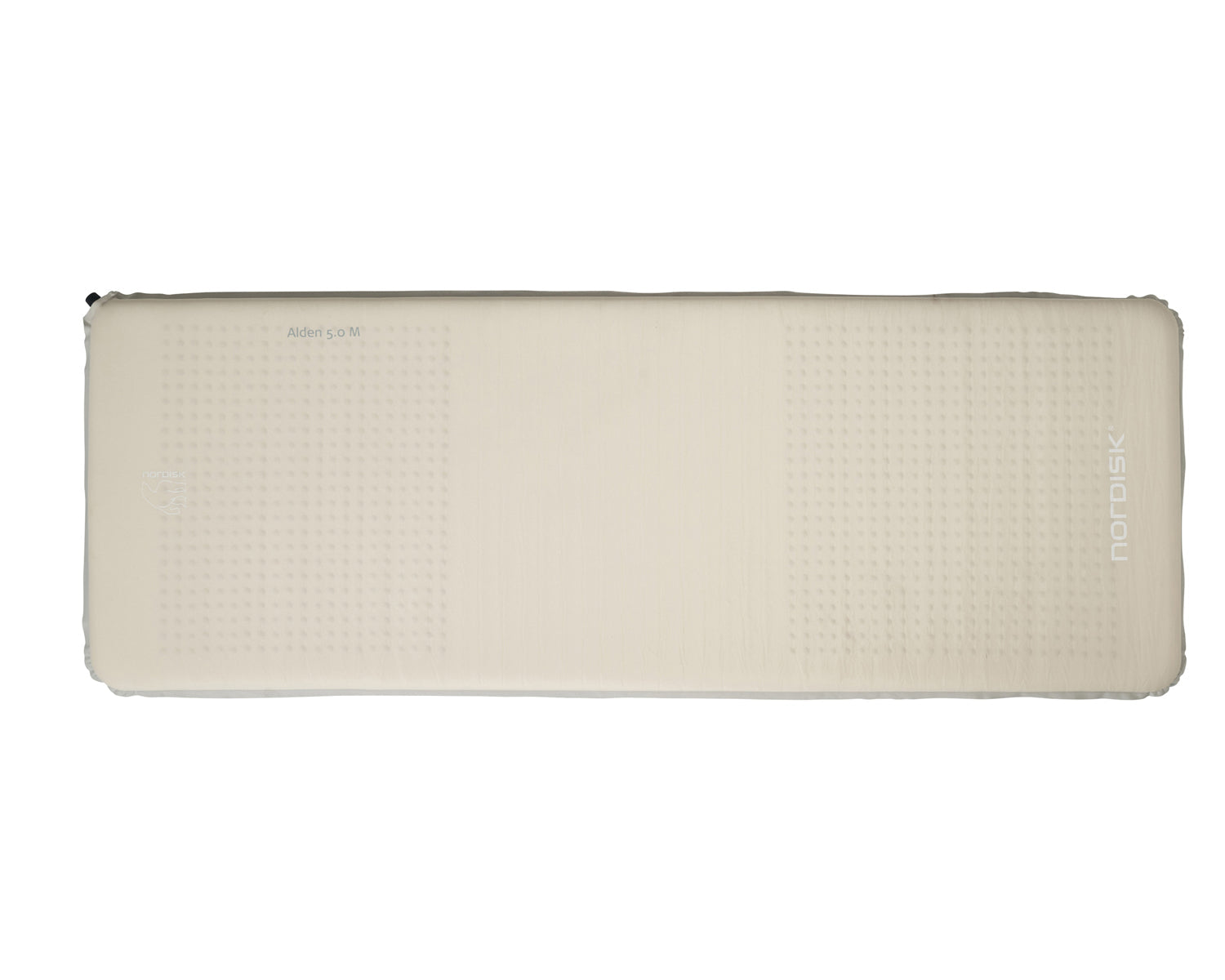
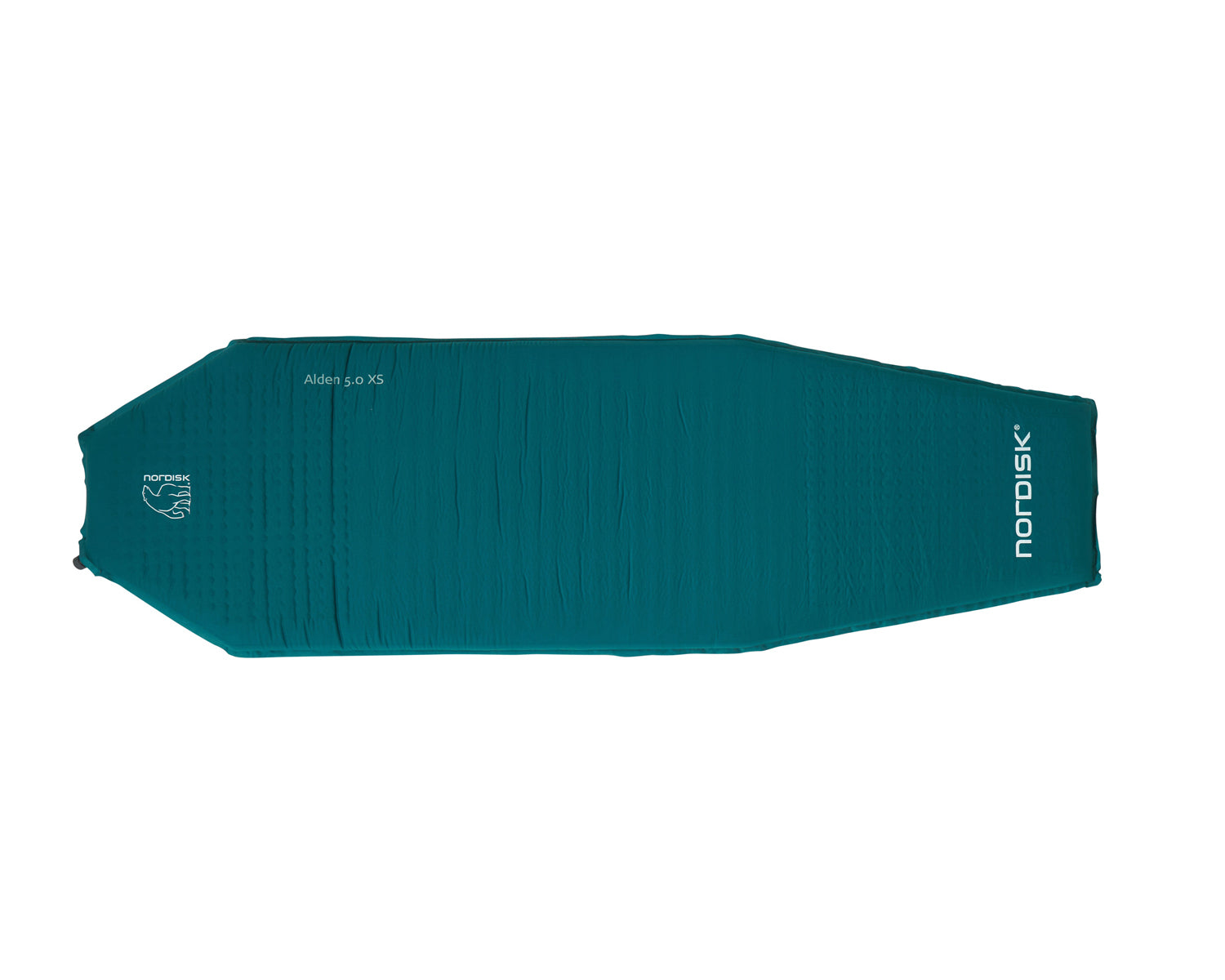
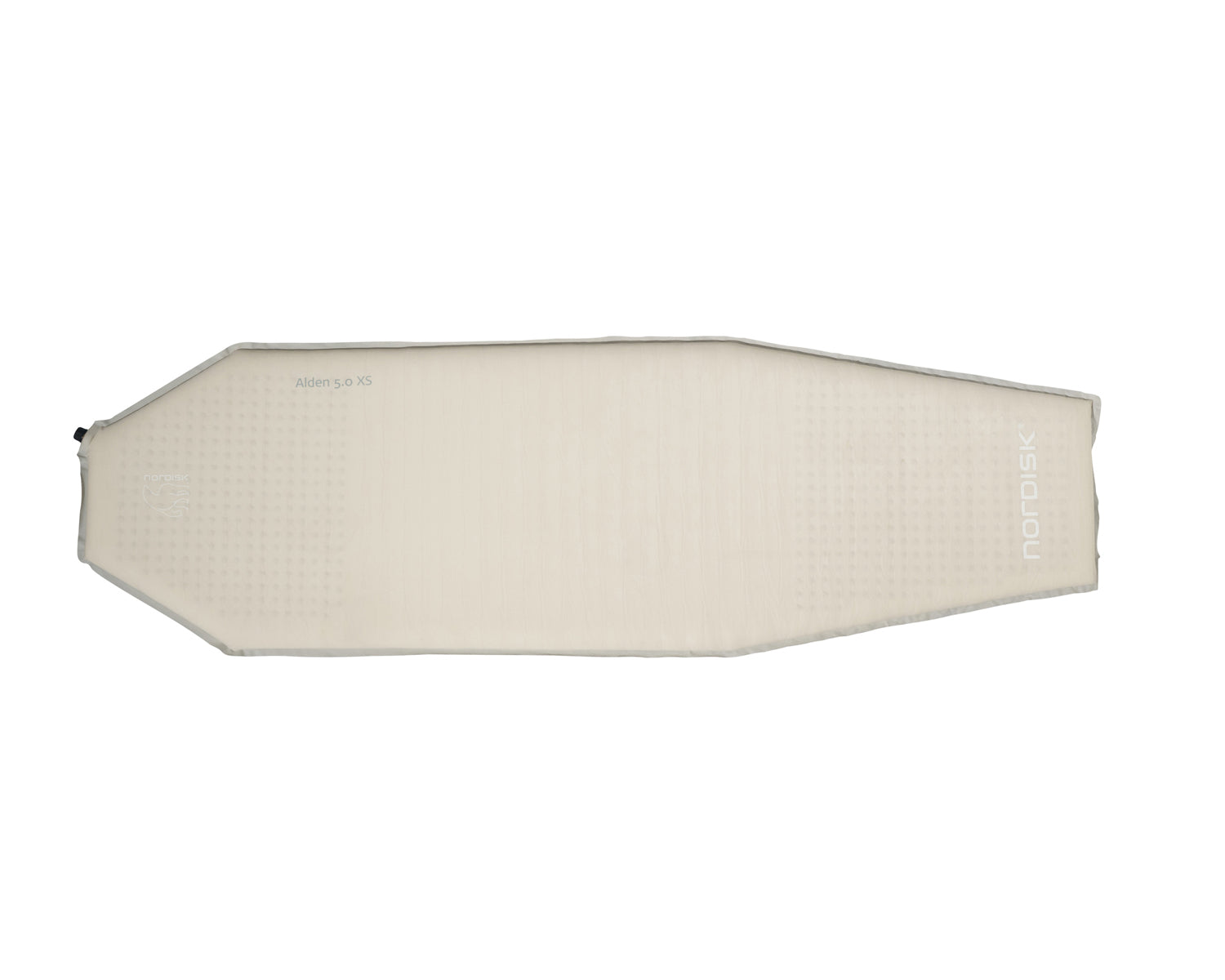
Two things decide which mat you need: how cold the ground gets, and how the mat travels to camp. The Alden 5.0 in S, M and L is a 5 cm three-season mat from 900 g. The Alden 10.0 XL is 10 cm thick with an R-value of 6, made for winter nights and car camping where weight matters less.
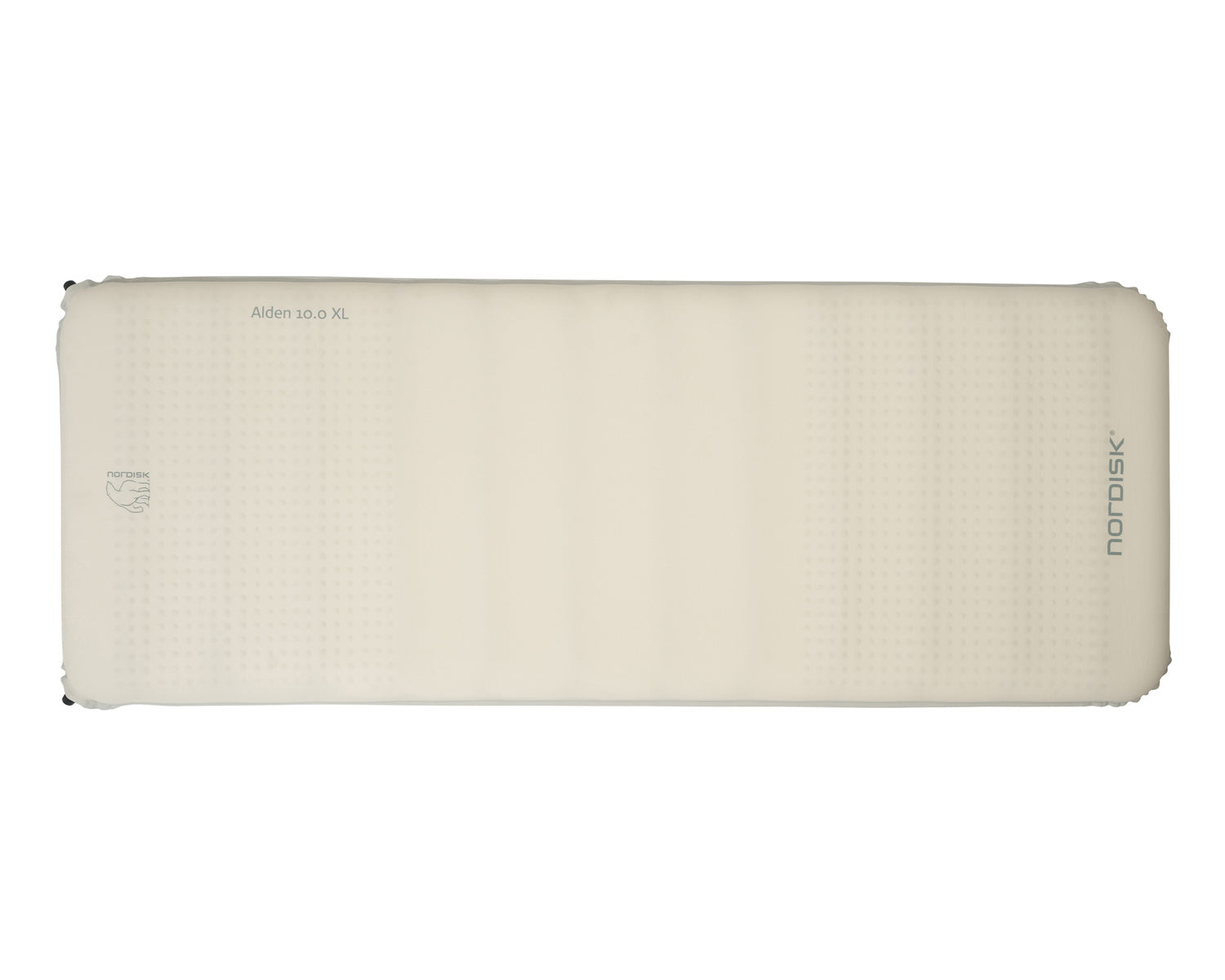
All four are self-inflating foam mats with a soft stretch polyester top in Sandshell and a Reflecting Pond back. Open the valve and the foam draws in air by itself.
Alden 10.0 XL
When the car carries the load, thickness counts for more than grams. The Alden 10.0 XL has a 10 cm foam core and an R-value of 6, in the range for -18 °C and colder.
It measures 200 x 75 cm and weighs 2.7 kg. Rolled up, it goes into a zipped bag with carry handles that measures 75 x 25 cm. The top is 30D stretch polyester in Sandshell, the back 20D polyester with a TPU coating in Reflecting Pond.
R-values explained
The R-value measures how well a mat resists heat flow. The higher the number, the less heat the cold ground draws out of your body. A warm sleeping bag cannot make up for a mat that insulates too little, because the fill underneath you is pressed flat by your weight.
As a guideline, an R-value under 2 suits summer nights around 10 °C, 2 to 3.9 covers three-season use down to around 0 °C, 4 to 5.4 handles frost down to around -7 °C, and 5.5 or more is for -18 °C and colder. That makes the Alden 5.0 with R 3.7 a three-season mat and the Alden 10.0 XL with R 6 a winter mat. The sleeping bag and mat FAQ has the full table.
R-values add up when you stack mats. A foam mat under an Alden gives the combined value, which is a simple way to handle a night that turns out colder than planned.
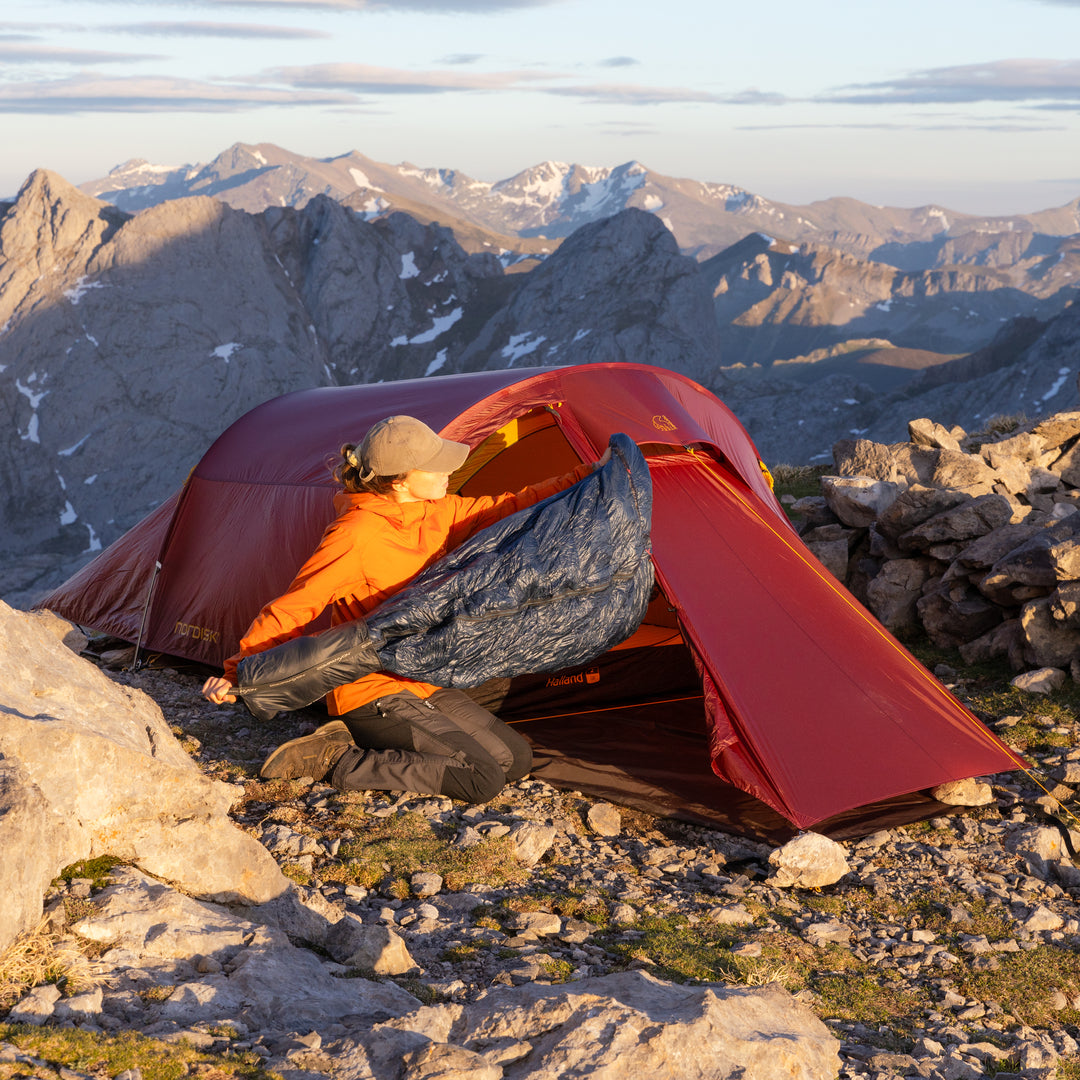
Materials and care
The top fabric is 30D polyester with stretch, the back is 20D polyester with a TPU coating, and the core is foam with a density of 16 kg/m³.
Store the mat unrolled with the valve open, so the foam keeps its ability to expand. Keep it away from direct heat, and clean the fabric with a damp cloth and mild soap.
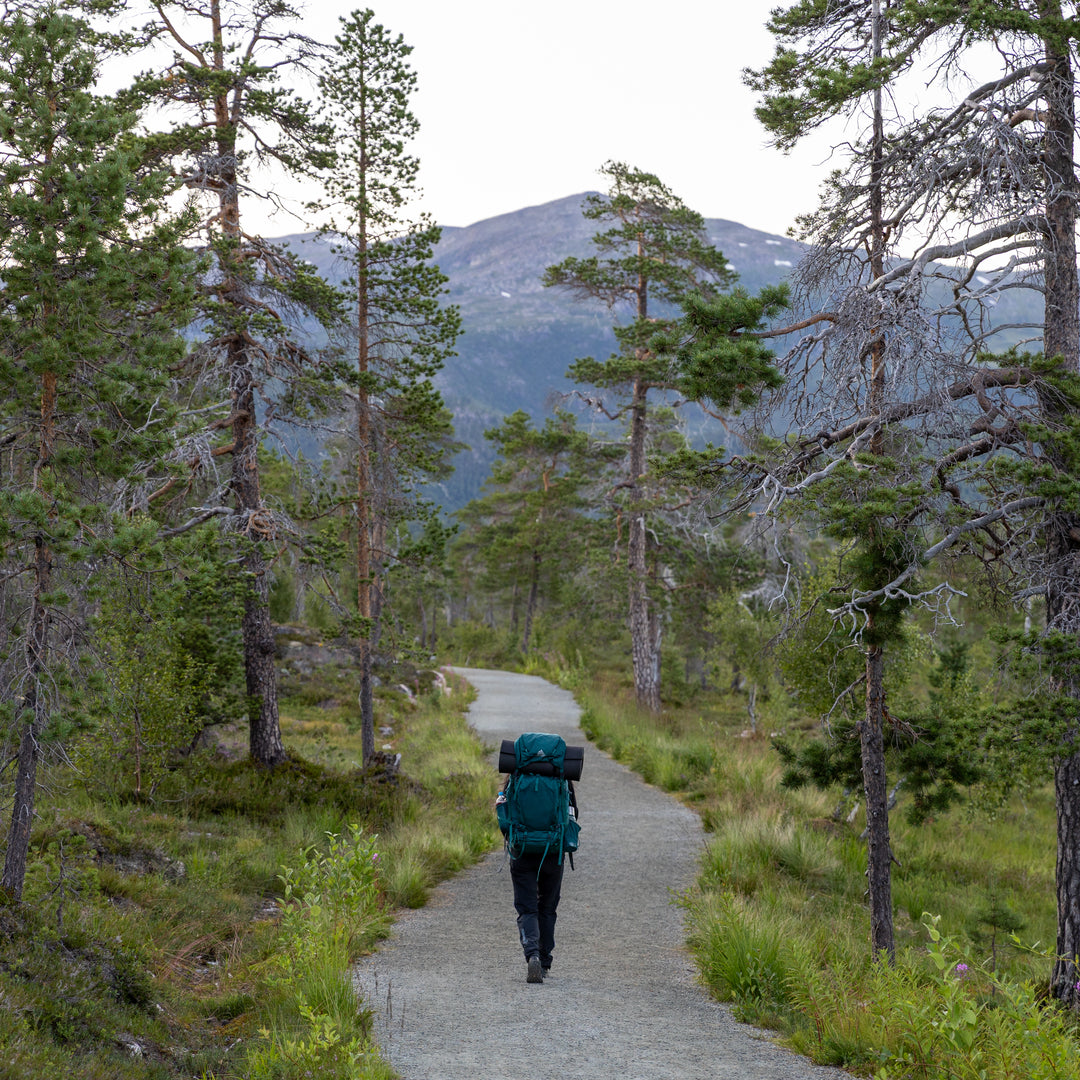
Repair and guarantee
Sharp stones, embers and thorns can puncture a mat on the trip. A small hole can usually be fixed in the field with an adhesive repair patch. Find the leak by holding the inflated mat under water and watching for bubbles, clean and dry the spot, apply the patch and let the adhesive cure before you inflate the mat again.
If the mat is damaged beyond repair, the Beyond Repair Guarantee gives you 50 % off a replacement for 2 years from purchase. It covers products bought at full price on da.nordisk.eu, nordisk.eu or nordisk.de, and not outlet or retailer purchases.
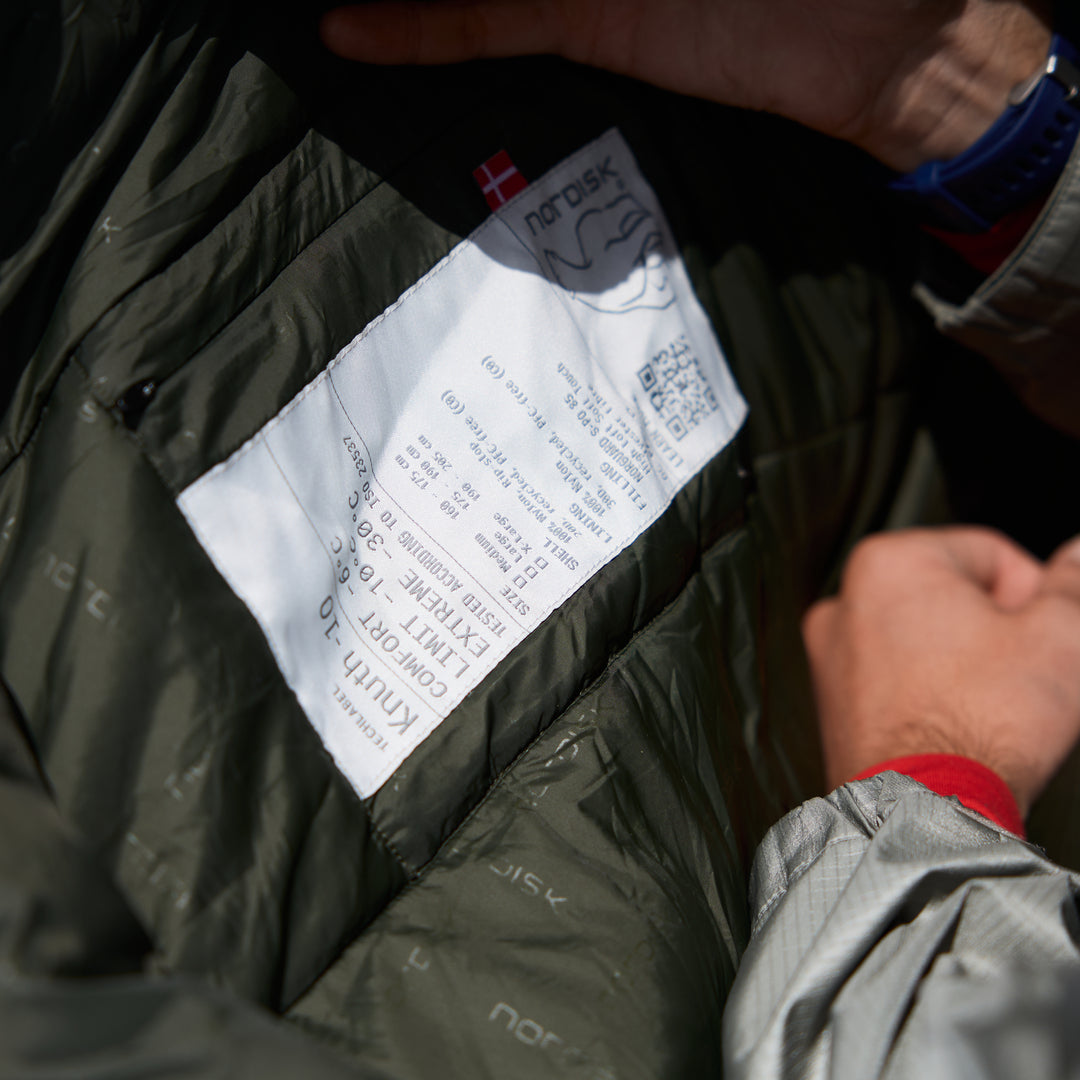
Mat and sleeping bag
The mat blocks the cold from below and the sleeping bag holds the warmth around you. Since the bag gives little insulation where your weight presses it flat, the mat does most of the work against the ground.
Width matters as well. Our blanket sleeping bags Freja, Frigg, Saga and Sif are 75 to 85 cm wide in M, L and XL. They give the feet more room than a mummy bag, and they pair well with the 75 cm wide Alden 5.0 L and Alden 10.0 XL, so you stay on the insulated surface through the night.

Inflating and packing
Unroll the mat, open the valve and let the foam expand for a few minutes. Then add one or two breaths to reach the firmness you like. Avoid high-pressure pumps, as they can damage the mat.
To pack it small, roll the mat tightly towards the open valve to push the air out. Close the valve, unroll the flat mat and roll it up a second time. The second roll removes the air that is left and gives the smallest pack size.