

Nordisk since 1901
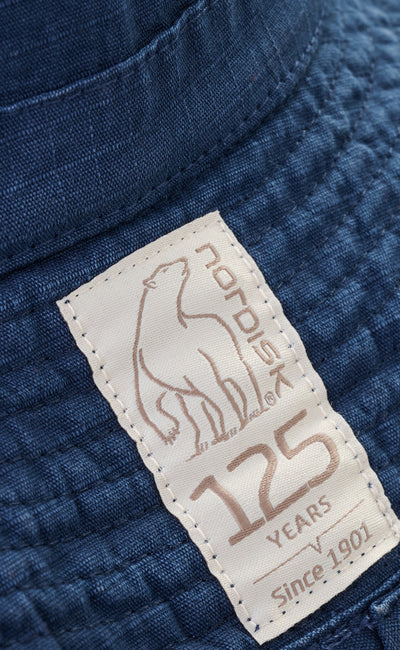
Nordisk was founded in Copenhagen in 1901 as Nordisk Fjerfabrik (Northern Feather), the first Danish company to work only with down and feathers. It started by trading raw materials and went on to develop its own duvets, quilts and pillows, growing into an international down and feather business.
In 1967 the company set up its first business dedicated to the growing outdoor market. Through the 1970s and 1980s, under the brand name Caravan, it helped build the European outdoor sector with its own companies in Germany, Denmark, Sweden and the UK.
In 1991 the products took the name Nordisk, true to the company's roots. Nordisk is still a European brand, and its products are now also sold in Asia, including Japan and Korea.

1901: The rise of Nordisk
On 20 March 1901, Nordisk Fjerfabrik A/S (Northern Feather) was founded in Copenhagen by H.O. Lange, the 23-year-old son of a Danish grocer. The idea was to buy and sell raw and semi-manufactured materials, mainly feathers and down, and the company soon grew into an international business.

1908: Worldwide expansion
As early as 1908, Nordisk Fjer set up a unit in China, and in 1917 Northern Feather Works Ltd. was established in New York. Production expanded to bed linen and related products, and from 1969 the company focused on developing, producing and selling its own feather and down products.

1941: The first sleeping bags
In the early 1940s, Nordisk Fjer began developing and producing its first sleeping bags, with both down and synthetic fill. The first designs built on the company's experience with pillows and blankets, but sleeping bags soon became a field of development in their own right, and the outdoor range grew from there.

1967: Focus on outdoor
Seeing the potential of the growing outdoor market, the company founded the subsidiary Nordisk Fritid in Malmö, Sweden, to develop products for outdoor use. This became Caravan, one of the early dedicated outdoor brands.

1974: The rise of Caravan
The first Caravan catalogue mainly featured sleeping bags and mats, alongside articles about the products and travel stories. Tents and apparel followed in 1977, and in 1979 backpacks were added as the catalogue was renamed Caravan Backpacking.

1980: Outdoor meets design
During the 1980s, Caravan added cookware, footwear, compasses, knives and bike bags and became a full outdoor brand, with a strong focus on design.

1991: Nordisk Freizeit continues on its own
After Nordisk Fjer went bankrupt in 1991, Nordisk Freizeit continued on its own under the existing management, with a focus on the North German market. The Caravan name was lost, and the products were sold under the name Nordisk for the first time.

2005: A new beginning
In 2005, Dane Erik Møller and two partners bought the company. With a renewed focus on product development, logistics, procurement and the Nordisk brand, they built the platform for taking Nordisk international again.

2010: Growth in Europe and Asia
From 2010, Nordisk focused on markets in Europe and Asia. A Chinese office gave Nordisk control of the value chain from production to the shop. A new product development programme was launched, and the visual identity was renewed around Danish and Scandinavian design.

2012: Bering, Nordisk redefined
Nordisk launches a new sleeping bag range led by the Bering, which receives the German, Danish, iF, OTS, OutDoor and Red Dot design awards.

2013: The launch of Telemark
A full update of the tent range is led by the Telemark 1 ULW, which receives several awards.

2014: Glamping is growing
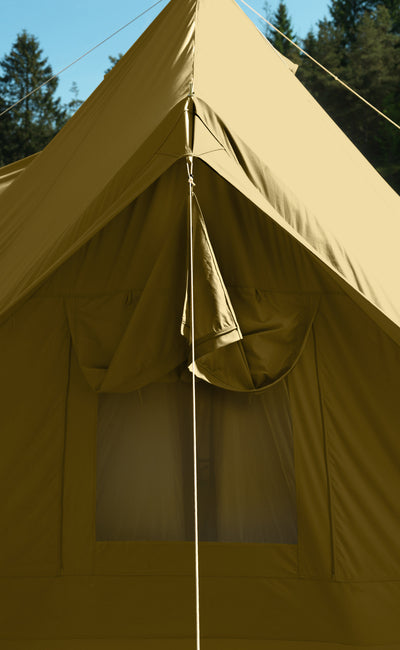
With the relaunch of the cotton tent range, glamping becomes a new focus, especially in Asia, where Nordisk builds a large following.

2015: Fibre fill from PET bottles
Nordisk launches the Oscar sleeping bag with fibre fill made from recycled PET bottles.

2016: Nordisk Japan
Responding to strong interest in Nordisk, especially in Taiwan and Japan, Nordisk opens an office in Japan to strengthen its presence in Asia.

2017: Launch of the Lofoten
The Lofoten launches with a race weight of 490 g and a pack size of 11 x 22 cm, making it one of the lightest double-wall tents of its time.

2017: The first Nordisk Village
In May, Italy's first Nordisk Village opens, 35 minutes by boat from St Mark's Square in Venice. As the first village of its kind in Southern Europe, it launches a new concept for Nordisk glamping, built around the Vanaheim tent.

2018: Nordisk joins the UN Global Goals
Nordisk joins the UN Global Goals and focuses on goal 8 (Decent work and economic growth) and goal 12 (Responsible consumption and production).

2020: Nordisk Hygge Circles
A Danish-Japanese team launches plans for Nordisk Hygge Circles // Ugakei in Japan, a park built around outdoor life, the UN Global Goals and the Danish concept of hygge.

2020: Yeti becomes part of Nordisk
After 15 years of close collaboration and joint ownership, Yeti and Nordisk merge into one brand, adding premium garments and down sleeping bags to the Nordisk range.

2021: Die Manufaktur in Germany
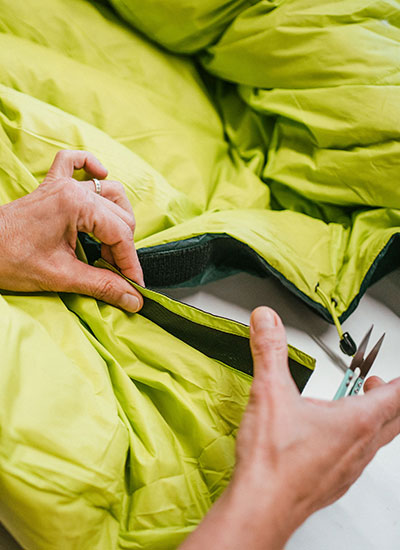
Nordisk opens Die Manufaktur in Görlitz, Germany, a workshop where down sleeping bags are made and repaired.